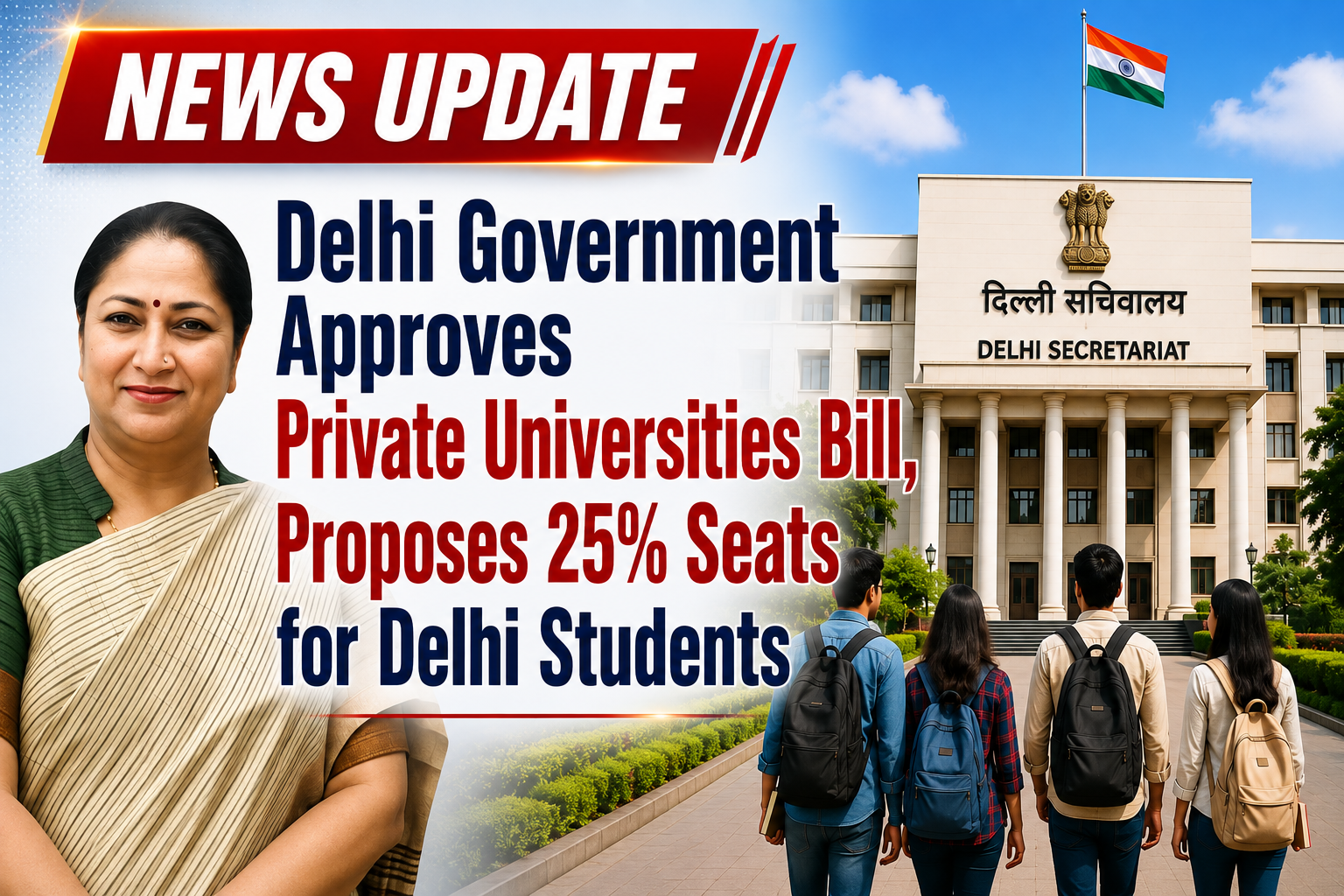
Delhi Government Approves Private Universities Bill : With this approval of the draft bill, the government of Delhi is expected to make its move for bringing a revolution in the system of higher education in the national capital through the Delhi Private Universities Bill.
The draft bill was approved by the Delhi Cabinet under the chairmanship of the chief minister, Rekha Gupta. This proposed bill is intended to provide more scope in higher education, attract investments in the education sector and ensure a transparent regulatory system for private universities in the National Capital Territory.
25% Seats Proposed for Delhi Students
Among the most important clauses in the Delhi Private Universities Bill is the proposal to set aside 25 percent of seats in all courses for students belonging to Delhi.
This will afford more chances for students of Delhi, who have to compete fiercely for seats in the already existing universities and colleges. The clause is likely to form an important part of the regulatory framework of the private universities in the capital city.
Greater Government Oversight of Private Universities
Moreover, the new law also proposes government supervision over private universities. In this regard, it has been reported that the system might incorporate government participation in the administration of private universities and systems of regulations to oversee academic programs and university operations.
Private universities will be placed within the ambit of accountability through the Bill. In this regard, these universities will have to adhere to prescribed standards and University Grants Commission (UGC) guidelines.
Focus on Quality and Student Protection
The Delhi Government has framed the legislation as a means of creating a modern and transparent regime for private higher education.
Issues such as academic quality, governance, welfare and accountability would be sorted out by the proposed regulatory regime. Fee waivers have also been considered as part of the new system, and that might make private higher education affordable for deserving students.
Students might get additional options for pursuing undergraduate, postgraduate, professional or any other form of higher education from within Delhi.
Existing Institutions May Also Come Under New Framework
The bill can have an impact on both upcoming private universities as well as those existing private universities which want to become universities or operate under the new system.
There are some conditions that need to be fulfilled by the institutions, including those regarding infrastructure, land, and regulation standards. Reports suggest that the private universities need to either buy or lease the land for a certain period of time and fulfill UGC requirements before getting approval.
Delhi Set to Enter New Private University Era
Delhi has historically been home to a large number of central funding, state funding, and other higher education institutes. The Private Universities Bill can help increase the presence of private institutes in the higher education landscape of Delhi.
This initiative may help promote more competition amongst universities and help invest in state-of-the-art infrastructure and technology-based education and research.
However, the success of this initiative will depend on the regulation of the fees structure by the government and maintaining quality of education.
Bill Still Needs to Complete Legislative Process
Whereas the draft bill has been approved by the Delhi Cabinet, it is crucial to emphasize that it still remains unpassed by the Delhi Assembly. For the draft bill to become legislation, it has to go through the necessary procedure.
Should the Delhi Private Universities Bill 2026 be adopted, it may prove to be a landmark step in the higher education sphere in the capital city as far as the provisions for 25% reservation of the Delhi students and more government control of private universities are concerned.
It goes without saying that the proposed bill has gained much attention among students, parents, educational institutions and private educational circles.