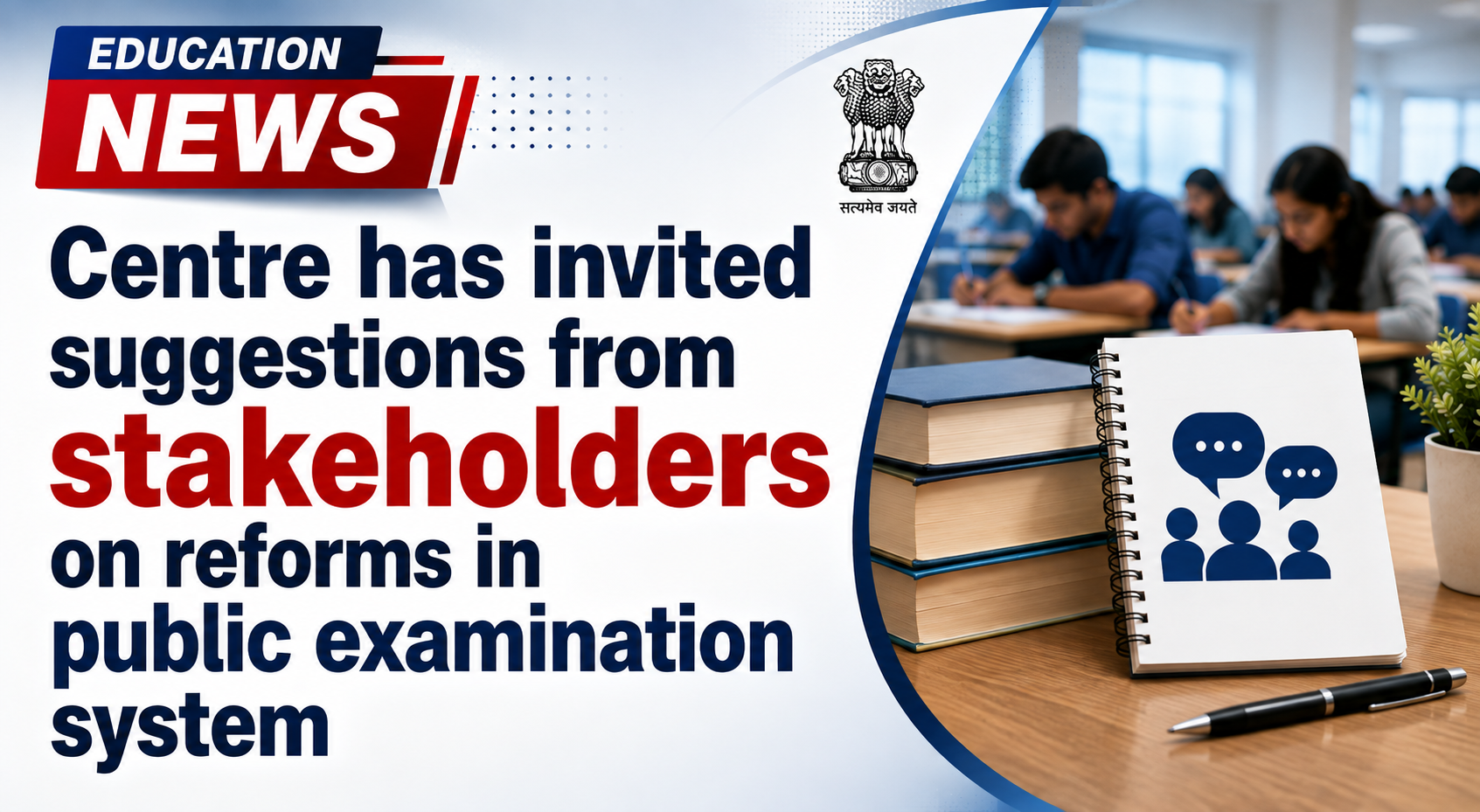
New Delhi: The Government of India has launched an online consultation for reforms in India’s examination system with a High-Powered Task Force (HPTF) led by Infosys co-founder Nandan Nilekani soliciting suggestions from students, parents, teachers, educational institutions, and other relevant stakeholders. The consultation seeks to create a more secure, transparent, equitable, and future-oriented examination system, which includes reforms in the examination conducted by National Testing Agency (NTA).
The current initiative has come at a time when the integrity and security of many important competitive examinations have been under severe scrutiny. Issues such as examination malpractices, leakages of papers, technological risks, and administrative lapses have put immense pressure on policymakers to reform the examination system. The new task force will seek to address these issues through institutional changes.
Students, Parents and Teachers Invited to Share Views
In particular, the Nilekani task force has sought suggestions from students, parents, teachers, academics, examination specialists and any other citizens. Citizens can provide feedback about how India’s examination system can be made safer and friendlier for the students.
It is pertinent to note that suggestions can be provided in English, Hindi and even regional languages thus increasing the participation of more citizens and students in this consultation. There are a number of ways of providing suggestions such as via the task force’s website, email, WhatsApp, and even the toll-free helpline facility. The deadline for providing suggestions is September 13, 2026.
As far as the government is concerned, the experience and perspective of stakeholders are important in the reform process. This feedback will be a part of the examination done by the task force before it makes any recommendations to the government.
What Will the Nilekani Panel Examine?
The High-Powered Task Force of six members has been given an extensive mandate which encompasses examination practice, examination security, design and governance of public examinations. This would include examinations conducted by NTA as well as the overall public examination system.
Examination integrity and security is one of the important issues which will be dealt with by the task force. They will consider measures which could be taken to prevent, detect and tackle any instances of malpractice along with the protection of question papers and other information related to the examination.
Another important issue which is under consideration is technology. As public examinations are increasingly adopting the practice of conducting computer-based tests and exams, the task force will consider the use of technology keeping in view the risks involved from cybersecurity point of view.
Focus on Examination Design and Assessment
Reforming this process does not mean dealing only with the issue of leaks in the question papers. The task force has also sought suggestions about the method of designing the question papers and the assessment procedure itself.
This may be regarding the preparation, evaluation, and distribution of the question papers, and the method of conducting the examinations and making assessments more reliable and objective.
The implications of this process reform may directly affect the students since the examinations in question may concern many millions of students who sit in NEET, JEE, CUET, and other similar exams, which determine their future admission chances and careers.
Strengthening NTA's Institutional Framework
NTA is one of the key organizations when it comes to the reform debate. In addition to including NTA examinations in the mandate of the task force, there are issues related to the institution and its governance being deliberated upon by the government.
The mandate of the task force is to consider measures which might enhance the institutional process, governance, accountability, and examination process. It would also study the issue of enhancing the examination infrastructure and human resource.
This move comes after a number of steps taken by the government to overhaul the NTA and restore confidence in students and others. Some senior level appointments have recently been made by the government as part of the overall exam system revamp.
Student Well-Being Also on the Agenda
One more significant element of the consultation process is the welfare of the students.
Competitive examinations may put a lot of pressure on the students. Thus, the task force is expected to make recommendations which will ensure the welfare of the students during the entire examination process. This will also involve looking at the issues of accessibility, inclusivity, and communications with the candidates.
Recommendations on creating an inclusive examination framework to enhance accessibility to the candidates from different social, economic, regional, and linguistic backgrounds will also be expected from the government.
Why Public Participation Matters
It is important that suggestions come straight from the people, considering the fact that students and their parents form one of the key stakeholders in the examinations process in India. Students are the ones who get to go through the process of examination and can see firsthand any issues that might arise.
Problems like the administration of the examination center, biometric authentication, technical glitches, delays, miscommunication, accessibility, and grievances can affect the candidate.
This way, the task force will be able to put together recommendations that solve both the security issue and the problem of students.
Earlier Examination Reform Recommendations
This consultation exercise itself is in response to other similar past attempts at reforming the Indian examinations system. An expert group under the chairmanship of the former ISRO chairman, K. Radhakrishnan, had already undertaken an analysis of the reforms related to the NTA and public examinations and submitted their findings to the government. The new Nilekani-led task force, however, has a wider scope, covering more than just the NTA.
It will now be important to see whether this new consultation process bears any fruit and does not just end up being another round of consultations and suggestions.
Deadline for Suggestions
Those who wish to be part of the examination reform process, such as students, parents, teachers and other stakeholders, can forward their ideas until September 13, 2026. Suggestions will be invited in English, Hindi and regional languages through various means.
It is the responsibility of the task force to design a robust, secure, transparent and future-ready examination system. The task force’s recommendations may have a huge impact on how national level examinations and the NTA function in the future.
For millions of students aspiring to take national level competitive and higher education entrance examinations, the success of the examination reforms will depend on how safe, predictable, transparent and fair examinations will become.